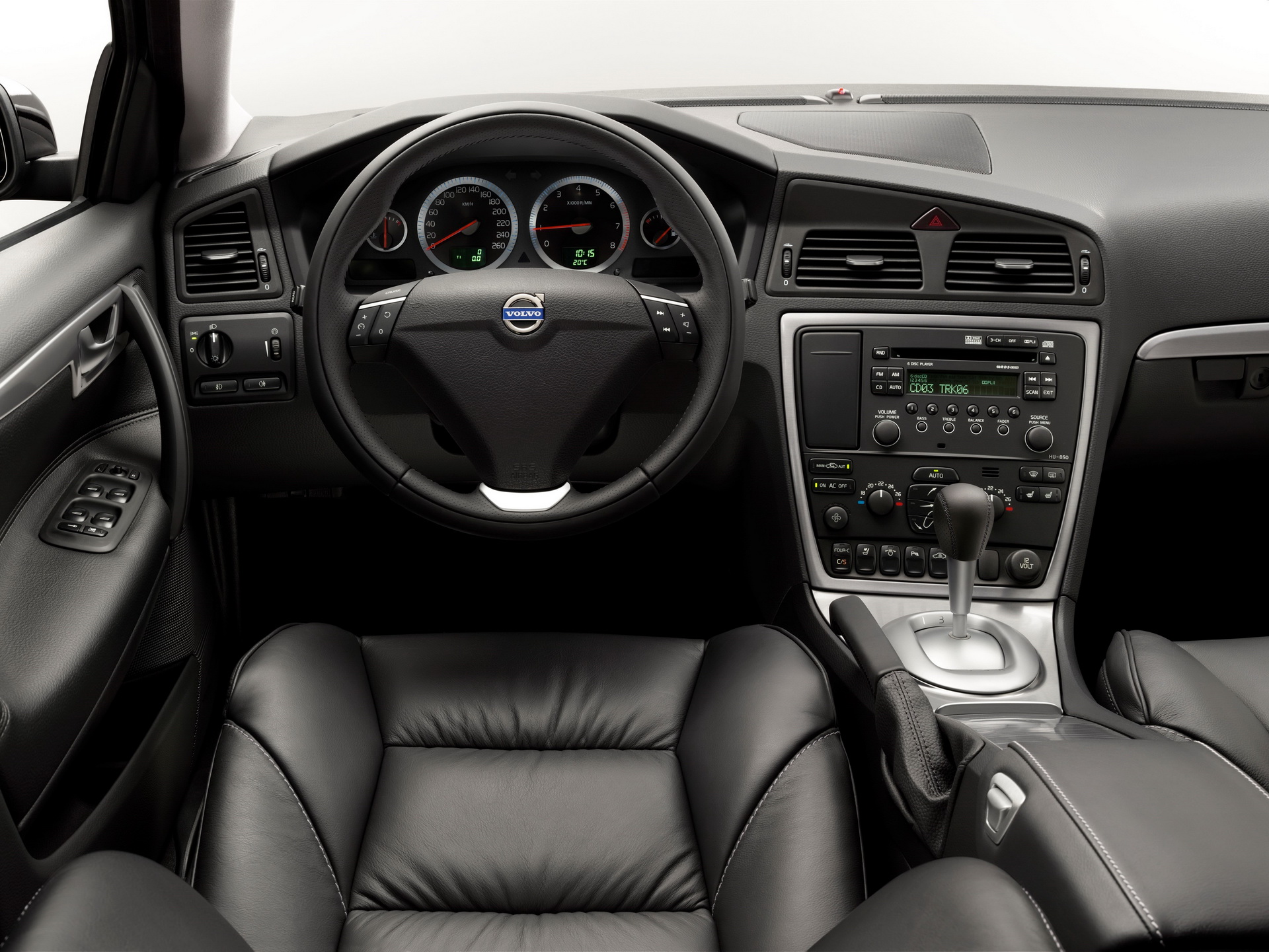
Airbags. (Not just the brand new, as they are tested and promoted, but those of the used, daily, cars).
24/September/2017
They did it again!
(The "Green" diesels, the direct injection, the Eurovan substitution of the Vanagon, the comeback of the, 60's, chains for the camshaft/s drive, so wrong as the substitution of the g60 for the vr6, the Haldex, (and the similar), 4wd transmission, solid axle for the front suspension, 2wd suvs, the various vulnerable electronic vehicle controls, the auto drive/brake systems, the blue/violet, eye destructive, cluster lighting, e.t.c., e.t.c....).
But why not without airbags? Since the "without airbags" technology/solution EXISTS!
We' ll see a lot ...
The CNN reports:
But is it possible a car, without airbags, to have lower death rates than a similar one with airbags?
Yes it is, as you can see here the death rate, (IIHS), of the 1992 Passat, is 24, without airbags, and the death rate, (IIHS), of the 2014 Passat is 42, with, (a lot of), airbags!
When you are equipped with airbags, you have, at least, to be polite!
26/October/2017
The shocking truth: the no airbags passive safety:
(Of the '70s).
27/October/2017
NHTSA, August 1996 , Publication DOT HS 808 470:
"When all of the results are taken into account, the best point estimates would appear to be a 13
percent fatality reduction by air bags for unbelted drivers and a 9 percent incremental fatality
reduction by air bags for belted drivers".
Just 9%? Without considering the deaths from the gases, many days after the event, the deafness from the "bang" in some cases, and more importantly, the, mr. Takata's, hardware failure!
IIHS, August 1997, SR 3207:
Who does it?
Can you imagine what if all these tries, (and the capital and all the resources), for a wrong system went through another route?
F.ex. do you know that Ferrari developed a system where the driver's seat and the steering wheel are based on a subframe with coils as a module, and in the case of a crash, the total thing, protects the driver absorbing the energy?
And that the import of such cars is forbidden in the U.S.A.?
O.k. o.k. I can hear you: "All these are not hard data. Is there any scientific evidence?" Here is one, (and more are coming): "News medical life sciences, University of Georgia", June 2005, article excerpt: "We are confident that our analyses better reflect the actual of airbags in the general population [than earlier studies]," said Meyer. "The evidence shows that airbags do more harm than good".
But how this can be? According to the same paper: "The reason earlier studies have found that airbags save lives is that they used only a special subset of the available data, said Meyer. The Fatality Analysis and Reporting System (FARS) is a highquality compilation of information about every highway accident for which a death occurred. The Crashworthiness Data System (CDS) is another highquality dataset, containing random samples of all accidents. The previous studies used FARS, and Meyer's study used CDS. "When we look at the random sample of all accidents, we find that airbags are associated with increased risk of death," she said, "and this increase is due to more deaths with airbags in lowspeed crashes and no seatbelts".
And another interesting question is: Since the airbags add safety, why don't professional race cars, like in F1/NASCAR/WRC, have them?
The no airbags super-safety!
Why they do not employ this technology to our, daily, cars? How many billion airbags must be sell before they implement the no airbags-zero deaths, under any circumstances, existing already, technology?
Is this Takata's crescendo?
"Toyota Motor Corp. is telling its dealers to turn off passenger-side airbags, slap a warning label on the visor and instruct people to sit in the back seat. Honda Motor Co., Nissan Motor Corp. and Mazda are doing the same". link
Airbag saves man, then
kills him (article excerpt)
An
engineer is saved in a crash by his airbag. However, during the crash, the
airbag bursts and the man inhales some of its noxious chemical fumes. He dies
two months later, the fumes being cited as a cause of death.
"Perhaps you've never
thought about what is inside your airbag, other than air. This story might make you
wonder. In 2010, Ronald Smith of Scotland,
was involved in a six-car accident, during which his airbag deployed
successfully. He wasn't hurt, even though he had been hit from behind and had
struck the car in front. The crash was of sufficient
force that his car window broke and pierced the airbag of his Vauxhall
Insignia.
(Vauxhall Motors is owned by General Motors.) After the crash, Smith,
an engineer, reported seeing white powder emerge from the airbag. His face was
also red from some sort of irritation, presumably related to the white powder. As Scotland
Daily Record reports,
he began to feel ill. A few weeks after the
crash, he was admitted to hospital, where he died. He had not been a smoker. He
had not experienced any other obvious health problems. His widow, June, told the Daily
Record: "I knew from the very beginning that it was the airbag. I just
knew but other people would look at me as if to say, 'don't be silly'." An inquest was finally held
this week. During it, a forensic pathologist talked about how Smith's lungs were
infected and that he died of bronchial pneumonia. The coroner, Terence
Carney, declared in his verdict: "This man died as a result of this
incident and more pointedly because of the explosion of his airbag, and this
death should be recorded as misadventure." Vauxhall, part of GM, says
it is investigating and doesn't wish to comment further. WashingtonUniversity's chemistry department says that
inside airbags is a mixture of
NaN3, KNO3, and SiO2.
The end result of the chemical reaction is supposed to be silicate glass, which
is safe. What might have happened
here is clearly still open to some conjecture, even if the coroner seemed very
clear. I can find no similar
incidents having occurred anywhere. However, given that airbags have already
been suspected of
causing physical harm to young children, shouldn't people be clearly warned about the
dangers of a severed airbag?
Still, even if Smith had
known the airbag contained dangerous chemicals, what could he have done to
prevent himself breathing in the noxious fumes"?
Announcement:
"9 February 2016
View photos
German automaker Daimler AG (Xetra:710000-news)
announced Tuesday the recall of some 840,000 Mercedes Benz and Daimler vehicles
in the United States equipped with potentially defective Takata (Frankfurt:7TK.F-news)
airbags.
Daimler said the recall included about 705,000 Mercedes-Benz cars and
136,000 Daimler vans.
It was the latest recall involving Takata airbags, which can rupture and
send shrapnel into occupants of a car.
At least 10 deaths, including nine in the United States, have been tied
to the faulty airbags. Automakers worldwide have been forced to recall more
than 20 million cars to have the airbags replaced.
Investigators suspect that the airbag inflators and the propellant inside
can deteriorate, especially in consistently hot and humid conditions, causing
them to misfire.
Last week Japan's Honda recalled 2.2 million cars equipped with Takata
airbags at risk of rupturing.
The US National Highway Traffic Safety Administration called the issue in
January "a massive safety crisis."
Takata, which has been accused of covering up the problem for years, was
fined $200 million by NHTSA in November for providing inadequate and inaccurate
information about the airbags and for failing to recall them quickly once it
became aware of the problem.".
For those who insist that there is no other way but the airbags, and if your car does not give you enough space to stay away from the steering wheel, let's examine another alternative. The helmet in the car.
Comparable results by using the helmet. (That is without Hans device).
Of course nobody wants to use a helmet driving a car!
The Monash University, introduces another similar, more practical and lighter solution: the head padding:
And, since this product is theoretical, and even better, in order to have side impact protection, (as said by the Monash), this, more acceptable aesthetically and by the law: (a video with lady driving her Mercedes wearing a bicycle helmet is coming.) Here it is:
From the above document let me choose the central idea, which may give an answer to the vast majority of the car crash questions, but this answer is out of the industry standards, it is Heretic, whatever this may mean: (The Syncro Heresy).
Factoid #1 And the side airbags... Last weekend, GM said that it was recalling more than 400 vehicles because the side air bag inflators could rupture and send shrapnel into drivers and passengers, according to the company and documents posted by the safety agency.
Honda reports 20th death from exploding Takata air bag
22/December/2017
By
TOM KRISHER
AP,
12:43 PM
DETROIT (AP) — A faulty Takata air bag inflator has killed another person, this time in Baton Rouge, Louisiana, Honda said Tuesday night.
The unidentified person is the 20th death worldwide attributed to the faulty inflators, which can explode with too much force and hurl shrapnel into car and truck cabins.
The person died in a July 10 crash of a 2004 Honda Civic. Officials from the automaker and the National Highway Traffic Safety Administration inspected the car Tuesday and confirmed that the driver’s air bag inflator blew apart and caused the death, Honda spokesman Marcos Frommer said.
Honda learned about the death only recently, and jointly inspected the car with government officials on Tuesday, he said. Honda did not release the person’s name or age.
Takata uses the chemical ammonium nitrate to create a small explosion that inflates air bags in a crash. But the chemical can deteriorate when exposed to high temperatures and humidity and burn too fast, blowing apart a metal canister.
The problem has touched off the largest series of automotive recalls in U.S. history — involving 42 million vehicles and as many as 69 million inflators — and forced Takata of Japan into bankruptcy protection. More than 100 million inflators have been recalled worldwide.
Honda says in a statement that the car’s air bag apparently was salvaged from another vehicle, a 2002 Civic. The owners of the 2004 Civic also had been sent multiple recall notices to replace the original inflator starting in June 2014, but the repair had not been made, Honda said.
The company said it is cooperating with the government as it investigates the matter.
Messages were left Tuesday night seeking comment from a NHTSA spokeswoman and the Baton Rouge police.
The death comes about one month after a report on the Takata recalls shows that automakers have replaced only 43 percent of the faulty parts even though recalls have been under way for more than 15 years.
The report, issued by an independent monitor who is keeping tabs on the recalls, also shows that auto companies are only about halfway toward a Dec. 31 goal of 100 percent replacement of older and more dangerous inflators.
The slow completion rate comes even though NHTSA coordinated the recalls and phased them in two years ago. Before that, the automakers were obtaining parts and distributing them on their own. Normally automakers fix 75 percent of vehicles within 18 months after the recall is announced.
Completion rates vary wildly by automaker, according to NHTSA. Tesla was best at 78.6 percent, followed by Honda at 64.8 percent. Mercedes-Benz was the worst at 2.3 percent.
Honda, which was Takata’s largest customer, has been going door-to-door trying to persuade owners to get their cars repaired. The company also is using Facebook in an effort to track down owners.
Frommer said the inflator from the 2002 Civic that was placed in the 2004 Civic in Baton Rouge likely was one of the most dangerous types made by Takata. Such inflators are in 2001-2003 Hondas. Tests have shown they have a 50 percent chance of blowing apart in a crash. (Article excerpt). link
29/April/2018
"Overall, the recall is the largest in U.S. history, involving more than 37 million vehicles built by 19 automakers.
Sen. Klobuchar presses Honda on efforts to track down deadly
The National Highway Traffic Safety Administration demonstrated how Takata air bags can spray shrapnel when they explode. (NHTSA photo)
A U.S. senator who heard testimony last month on the recall of Takata automotive air bags, which have sprayed shrapnel that has killed 22 people and injured hundreds more, is continuing to put pressure on Honda Motor Co. about its efforts to track down the most dangerous of the air bags.
Honda acknowledged in communication with the Senate Committee on Commerce, Science and Transportation last month that 62,307 people continue to drive with air bags that were tainted by high humidity at a Takata factory in Monclova, Mexico, before they were installed in Honda or Acura vehicles. While most Takata inflators go bad over time when exposed to temperature changes and humidity, these “Alpha” inflators have been given the highest priority in the recall effort, and Honda said that more than a million of them have been replaced.
“Takata air bag inflators known as ‘alphas’ installed in certain 2001, 2002 and 2003 Honda and Acura models have been shown to pose a 50 percent risk of rupture when the air bags deploy. According to Honda, more than 60,000 vehicles still contain alpha inflators,” Sen. Amy Klobuchar (D-Minn.) wrote in a letter Wednesday to Honda Vice President Rick Schostek. “Given the significant public safety threat caused by these defective parts, the removal of all alpha inflators from America’s roads must be an immediate priority.”
Schostek testified before the commerce committee, of which Klobuchar is a member, last month that Honda has made unprecedented efforts to contact the more than 60,000 customers with Alpha bags, and all other Honda drivers with the dangerous Takata air bags. He said Honda’s efforts included a door-to-door campaign to alert owners, a canvassing recommended by John D. Buretta, who was appointed as an independent monitor to oversee the Takata recall.
Overall, the recall is the largest in U.S. history, involving more than 37 million vehicles built by 19 automakers.
Klobuchar, who has been involved with the Takata recall for several years, wrote Schostek three days after a Washington Post article describing the recall effort.
Takata, which has filed for bankruptcy protection, reached a $650 million settlement with the U.S. Department of Justice in February for criminal misconduct involving an alleged coverup of testing which uncovered the defect. As part of the settlement, Takata paid a $25 million criminal penalty and $850 million in restitution to automakers. The company also established a $125 million compensation fund for motorists harmed by the air bags.
Traffic deaths skyrocketed last year by the largest amount since 1966, erasing safety gains made in recent years.
(blog's underlining)
The National Highway Traffic Safety Administration released raw 2015 data yesterday, revealing that 35,092 people died on U.S. roads — a 7.2 percent spike in fatalities compared to the previous year. The data shows the deaths weren’t confined to any particular demographic.
As bad as it sounds, the increase is less than the NHTSA’s July estimate of a 7.7-percent gain.
Vehicles are safer today than even a decade ago, when traffic deaths were 25-percent higher, but a range of factors cancelled out the extra airbags and driving aids offered up by automakers.
The NHTSA blames low fuel prices, job growth, increased leisure driving, and increased youth driving for the increase in vehicles on the road. Vehicle miles traveled rose by 3.5 percent in 2015, the largest increase in a quarter century. And more vehicles boost the odds that some of them will crash.
Data shows that old habits die hard — in this case, literally. Lawmakers have made gains in reducing impaired driving, but a third of last year’s crashes can be blamed on drunk driving and simple speeding.
About half of the vehicle occupants killed weren’t wearing a seatbelt.
(blog's underlining)
One in ten deaths involved distracted driving.
The jump in fatalities occurred outside of vehicles, too.
The Department of Transportation, along with the NHTSA and the White House released a call to action in the wake of the findings. The government wants experts, scientists and safety groups to propose “novel solutions to old challenges.”
“The data tell us that people die when they drive drunk, distracted, or drowsy, or if they are speeding or unbuckled,” said NHTSA administrator Mark Rosekind in a release. “While there have been enormous improvements in many of these areas, we need to find new solutions to end traffic fatalities.”
At the very least, expect new campaigns against drunk, distracted and reckless driving in the short-term.
Takata, the parts supplier that furnished automakers with millions of extremely dangerous airbag inflators, was forced to issue another recall last week. Considering the hundreds of millions of units already recalled by the company, another 2.7 million is a drop in the bucket. But there’s a slight problem, as these newly recalled inflators are devices that have already been replaced.
In 2015, regulators specified Takata had until the end of 2019 to ensure its replacement airbag inflators were safe. With the “fixed” units now under scrutiny, automakers may be liable for the supplier’s wrongdoing as the millions upon millions of recalled inflators would need to be replaced for a second time.
The current recall was prompted after the U.S. National Highway Traffic Safety Administration found the drying agent added specifically to combat the moisture that degrades the ammonium nitrate compound wasn’t effective.
“Absent proof that the other desiccated inflators are safe, they will also be subject to recall,” the NHTSA said in a statement last week.
Takata stated it has produced roughly 100 million replacement inflators containing drying agents. The 2.7 million recalled last week used calcium sulfate while the rest used zeolite.
According to Reuters, automakers have been burdened with a significant portion of the estimated $10 billion cost of replacing the faulty inflators. They’d also be liable in the event of NHTSA deciding Takata failed to adequately address the safety issues with the remaining recalled units. At this point, there isn’t much more that can be done with the Japanese supplier.
“The automakers … and Takata — they all know that this is a future issue,” said Scott Upham, chief executive at Valient Market Research, whose clients consist of several auto parts suppliers. “But I think everybody is concerned about the near-term issues, and the financial arrangements of the bankruptcy.”
Obviously, the most pressing short-term danger consists of additional harm to motorists. So far, the faulty inflators have contributed to at least 17 known fatalities and countless injuries.
Takata is the only airbag manufacturer to use ammonium nitrate as a propellant in its systems. It’s unlikely that will ever change, due to the compound’s volatile tendencies. Takata’s inflators can rupture the airbag, spraying vehicle occupants with shrapnel, after the compound is exposed to moisture or high temperatures for prolonged periods.
While the drying agents used appear to have stabilized the propellant somewhat, fears remain that it’s simply too volatile to be used in inflators and will require removal if the NHTSA isn’t satisfied.
Honda is likely to be the company most hurt by a second round of recalls, since it used more of Takata’s inflators than any competitor. But it won’t be the only one to suffer.
Toyota, Nissan, General Motors, Ford, Fiat Chrysler, Mazda, Subaru, Jaguar Land Rover, Mitsubishi, Tesla, Fisker, Ferrari, McLaren, BMW, Mercedes-Benz, and Volkswagen Group have also all been affected by the recall.
08/May/2019 Quizzzzz.... Do you know how many airbags have the most expensive and the fastest cars of the world? The answer is to the next video:
No airbags equals to 0, you know...
August 2021
Both seat belt pretentioners exploded going at 80 km/h without any,
obvious, reason. A big "bang", the smell of shooting and both front
seat belts blocked.. If the airbags where still into their position...
(They where out from the original owner, long time ago). But the Syncro
Heresy does not allow airbags! So here we are!
This object is rejected from the seat belts and everything is working perfectly again:
27 September 2025
Fake Airbags From China Are Exploding In US Cars Killing People
Airbags from Chinese firm DTN can be up to
10 times cheaper than legitimate ones but NHTSA warns that they are
dangerous
Counterfeit airbag inflators from China are being retrofitted into US vehicles.
22-year-old mother killed in Florida when the airbag exploded “like a grenade.”
Transportation Secretary warns repair shops installing these airbags commit crimes.
A new federal investigation is shining a light on potentially deadly
aftermarket airbag parts after a series of crashes exposed catastrophic
failures. The National Highway Traffic Safety Administration (NHTSA)
has opened a probe following seven incidents linked to faulty
inflators, five of which proved fatal. The issue has drawn a sharp
warning from Transportation Secretary Sean Duffy, who labeled the
devices “dangerous.”
The components under scrutiny are believed to come from Jilin
Province Detiannuo Safety Technology, better known as DTN Airbag.
Investigators allege that the company’s inflators contain volatile
chemicals that can ignite during deployment, causing the airbag to
inflate violently and without control.
Counterfeit Parts on the Market
According to The Wall Street Journal,
which first reported on the investigation, noted that the NHTSA has
connected DTN to seven incidents and five fatalities involving the
airbag inflators. One of these fatalities only happened as recently as
July.
It’s understood that many repair shops and assemblers have been
importing the cheap airbag inflators from overseas, often without
realizing it. WSJ reports that DTN’s products are counterfeits that
closely mimic genuine parts, yet they’re sold at a fraction of the
price, sometimes as little as one-tenth the cost.
“These fakes are often constructed with poor-quality materials and
are more likely to fail because they’re only imitations of the
engineering that goes into the real product,” Bob Stewart, president of
the Automotive Anti-Counterfeiting Council and global brand protection
manager at General Motors, told the newspaper.
The issue first surfaced publicly in the US
when the family of 22-year-old Destiny Byassee filed a lawsuit in
Florida. The young mother was killed in a crash while traveling at just
30 mph (48kmh) in her 2020 Chevrolet Malibu. Investigators allege that a
counterfeit DTN inflator had been installed, and that it exploded “like
a grenade,” sending sharp pieces of metal and plastic into her neck.
Federal Warning
“My message to the auto repair industry is clear: whoever is bringing
this faulty Chinese equipment into the country and installing them is
putting American families in danger and committing a serious crime,”
Transportation Secretary Sean Duffy recently said. He has urged repair
shops and distributors to remain vigilant, emphasizing that DTN
inflators pose a direct risk to public safety.
There’s no word on how many vehicles in the US may have been installed with counterfeit airbag inflators
from DTN. The company, for its part, maintains that its products are
banned from sale in the US and insists it does not conduct business
within the country.